Showing posts with label Technology. Show all posts

Saturday, July 15, 2023

Mission: Chandrayaan 3

In this blog you will get information about Chandrayaan 3 rocket, it's purpose ,which rocket is used, which engine are powered.etc so be ready to boost your knowledge by this blog. 

1)Purpose to launch Chandrayaan 3 
Its main purpose is to create and showcase innovative technologies essential for missions between planets. The propulsion module will transport the lander and rover from the injection orbit to the lunar orbit up to 100 km.This Mission cost over  ₹615crore

2)Which rocket is use in Chandrayaan 3 mission?
The Launch Vehicle Mark-III or LVM3 previously referred as the Geosynchronous Satellite Launch Vehicle Mark III or GSLV Mk III is a three-stage medium-lift launch vehicle developed by the Indian Space Research Organisation (ISRO). Primarily designed to launch communication satellites into geostationary orbit,It is also due to launch crewed missions under the Indian Human Spaceflight Programme.LVM3 has a higher payload capacity than its predecessor, GSLV.


3)GSLV Mark-lll or LVM3 (Geosynchronous Satellite Launch Vehicle)
Functions Medium-lift launch vehicle
ManufacturerISRO
Country of originIndia
Cost per launch₹500crore (US$63 million)

Size
Height43.43 m (142.5 ft)
Diameter4 m (13 ft)
Mass640,000 kg (1,410,000 lb)
Stages3

Capacity
Payload to LEO
Mass10,000 kg (22,000 lb)

Payload to GTO
Mass4,000 kg (8,800 lb)


Associated rockets
FamilyGeosynchronous Satellite Launch Vehicle
Comparable
  • Angara
  • Atlas V
  • Falcon 9
  • H-IIA
  • Long March 3B
  • Long March 7
  • Titan IIIC
  • Zenit rocket

Launch history
StatusActive
Launch sitesCARE, Chandrayaan-2, OneWeb, Chandrayaan-3
Total launches      7
Success(es)7
Failure(s)0
Partial failure(s)0
First flight
  • 18 December 2014 (suborbital)
  • 5 June 2017 (orbital)
Last flight14 July 2023


First stage – S200 Boosters
Height25 m (82 ft)
Diameter3.2 m (10 ft)
Empty mass31,000 kg (68,000 lb) each
Gross mass236,000 kg (520,000 lb) each
Powered bySolid S200
Maximum thrust5,150 kN (525 tf
Specific impulse 274.5 seconds (2.692 km/s) (vacuum)
Burn time128 s


Second stage – L110
Height21.39 m (70.2 ft)
Diameter4.0 m (13.1 ft)
Empty mass9,000 kg (20,000 lb)
Gross mass125,000 kg (276,000 lb)
Propellant mass116,000 kg (256,000 lb)
Powered by2 Vikas engines
Maximum thrust1,598 kN (163.0 tf)
Specific impulse293 seconds (2.87 km/s)
Burn time203 s


Third stage – C25
Height13.545 m (44.44 ft)
Diameter4.0 m (13.1 ft)
Empty mass5,000 kg (11,000 lb)
Gross mass33,000 kg (73,000 lb)
Propellant mass28,000 kg (62,000 lb)
Powered by1 CE-20
Maximum thrust186.36 kN (19.003 tf)
Specific impulse442 seconds (4.33 km/s)
Burn time643 s


4) Important Dates 
i)August 1
Chandrayaan will start orbiting the moon. In 5 days it will reach the Moon's outer orbit

ii)August 17
The spacecraft's propulsion module will separate from the lander module

iii)August 23
in the evening 5:47 p.m. The lander will land on the surface of the moon

Chandrayaan will travel around 4 lakh km in 42 days.


5)LVM3-M4/ Chandrayaan-3 Mission
Chandrayaan-3, India's third lunar exploration mission is ready to take off in fourth operational mission (M4) of LVM3 launcher. ISRO is crossing new frontiers by demonstrating soft landing on lunar surface by its lunar module and demonstrate roving on the lunar terrain. It is expected to be supportive to ISRO's future interplanetary missions Additionally the deployment of rover and in-situ scientific experiment will scale new heights in lunar expeditions by deploying Rover. Yes, ISRO is bringing the Moon closer to us.

6)Propulsion Module
Chandrayaan-3 consists of an indigenous propulsion module, lander module, and a rover with an objective of developing and demonstrating new technologies required for inter-planetary missions.

The propulsion module will carry the lander and rover from injection orbit to till 100 km lunar orbit. It also carries a Spectro-polarimetry of Habitable Planetary Earth (SHAPE) payload to study the spectral and polarimetric measurements of earth from the lunar orbit.

The main function of Propulsion Module is to carry the LM from launch vehicle injection orbit to till Lander separation.

*Propulsion Module Payload*
1)SHAPE
(Spectro-polarimetry of HAbitable Planet Earth)
An experimental payload to study the spectro-polarimetric signatures of the habitable planet Earth in the near-infrared (NIR) wavelength range (1-1.7 m).


7) Satellite Information 
I)Major Specifications of Lander
Mission life:1 Lunar day (14 Earth days)
Mass:1749.86 kg including Rover
Power :738 W (Winter solstice)
Payloads:3
Dimensions (mm³): 2000 x 2000 x 1166 : 
Communication:ISDN,Ch-2 Orbiter, Rover
Landing site:69.367621 5, 32.348126 E
 
*Lander Payloads*
1)RAMBHA-LP
(Langmuir Probe) 
To measure the near surface plasma (ions and electrons) density and its changes with time.

2)ChaSTE
(Chandra's SurfaceThermo-physical Experiment) 
To carry out the measurements of thermal properties of lunar surface near polar
region.

3)ILSA
(Instrument for Lunar Seismic Activity)
To measure seismicity around the landing site and delineating the structure of the lunar crust and mantle.

II)Major Specifications of Rover
Mission Life:1 Lunar day
Mass :26 kg
Power:50W
Payloads:2
Dimensions (mm³):917 x 750 x 397
Communication:Lander 

*Rover Payloads*
1)APXS
(Alpha Particle X-Ray Spectrometer)
To derive the chemical composition and infer mineralogical composition to further enhance our understanding of lunar surface.

2)LIBS
Laser Induced Breakdown Spectroscope
To determine the elemental composition (Mg, Al, Si, K, Ca ,Ti, Fe) of lunar soil and rocks around the lunar landing site


*Important images*

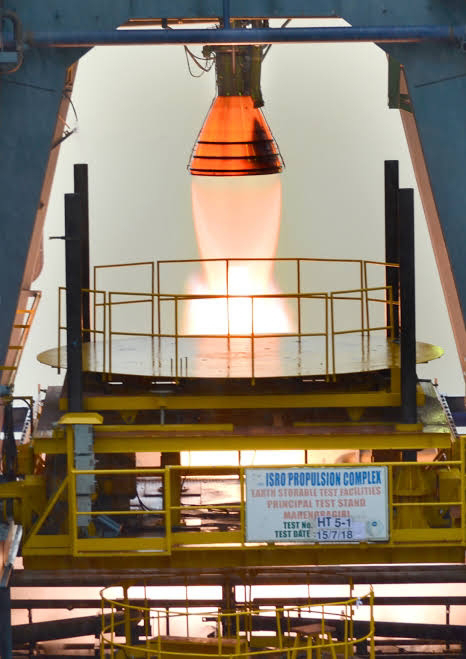
        Solid S200 engine- Chandrayaan 3

            Vikas engines-Chandrayaan 3 

          1 CE-20 engine- Chandrayaan 3

 "A reader lives a thousand lives before he dies."
                                       -George R.R. Martin


*Follow us on and Subscribe*
Join our Telegram group


By- Tanishq Deshmukh

15 July 2023

Tuesday, May 30, 2023

What is Hydrogen Car. (Future,types of engine,speed,cost, companies,etc.)

hyperion xp-1
Hypersion xp-1
Top speed - 220mph

1] What is hydrogen engine ?
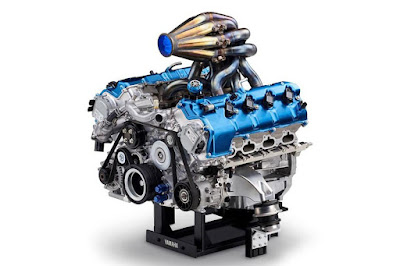
A hydrogen engine, also known as a hydrogen-fueled engine, is an internal combustion engine that uses hydrogen as its primary fuel source instead of conventional fossil fuels like gasoline or diesel. Hydrogen engines are designed to burn hydrogen in the presence of oxygen to produce mechanical energy, which can be used to power vehicles or other machinery.

2]How they works?
The basic operation of a hydrogen engine is similar to that of a traditional internal combustion engine. The hydrogen fuel is injected into the engine's combustion chamber, where it mixes with air and is ignited by a spark plug or through compression. The combustion of hydrogen and oxygen produces a high-temperature, high-pressure gas that drives the engine's pistons, converting the chemical energy of hydrogen into mechanical energy. This mechanical energy can then be used to propel a vehicle or operate machinery.


3]Advantage of Hydrogen engine
Advantage of hydrogen engines is that they produce only water vapor as a byproduct of combustion, making them environmentally friendly and contributing to reduced greenhouse gas emissions. Additionally, hydrogen is a highly abundant element and can be produced from various sources, including renewable energy sources, further enhancing its appeal as a clean energy option.
However, there are some challenges associated with hydrogen engines. Hydrogen has a low energy density compared to conventional fuels, which means that a larger volume of hydrogen is required to produce the same amount of energy. Storage and transportation of hydrogen can be complex and costly, as it requires high-pressure containers or cryogenic conditions. Moreover, the production of hydrogen often relies on fossil fuel-based processes, which can limit the overall environmental benefits unless renewable energy sources are used.


4]There are different types of hydrogen engines or propulsion systems used in vehicles. Here are a few common types:
1)Hydrogen Fuel Cell Electric Vehicle
(FCEV): 
Fuel cell vehicles use a hydrogen fuel cell to generate electricity through a chemical reaction between hydrogen and oxygen. The electricity powers an electric motor, propelling the vehicle. The only byproduct of this process is water vapor.


2)Hydrogen Internal Combustion Engine (ICE): In hydrogen ICE vehicles, hydrogen is used as a fuel in an internal combustion engine similar to gasoline or diesel engines. Hydrogen is injected into the engine's combustion chamber, where it mixes with air and is ignited to produce power. Hydrogen combustion in an ICE can be used in modified gasoline or diesel engines.

3)Hydrogen Hybrid: Hydrogen hybrid vehicles combine the use of hydrogen with another power source, such as a battery or conventional fuel. These vehicles typically have a smaller hydrogen fuel cell system that assists the main power source, providing additional power during acceleration or other high-demand situations.

4)Hydrogen Range Extender: 
Some hybrid electric vehicles use a hydrogen fuel cell as a range extender. In this setup, an onboard fuel cell system generates electricity to charge the vehicle's batteries, extending the electric range and reducing reliance on the conventional internal combustion engine.

It's important to note that hydrogen fuel cell vehicles, such as FCEVs, are currently more common and commercially available compared to hydrogen internal combustion engine vehicles. The technology for hydrogen ICE vehicles is still being developed and has limited practical application at the moment.


5]Cars that are powered by hydrogen engine Hydrogen-powered cars, also known as fuel cell vehicles (FCVs), use hydrogen as their primary fuel source to generate electricity for powering an electric motor. Here are a few examples of cars that are powered by a hydrogen engine:

1)Toyota Mirai: The Toyota Mirai is a four-door sedan that runs on hydrogen fuel cells. It has a range of approximately 500 kilometers (310 miles) on a full tank of hydrogen.
Top speed- 178 km/h (110 mph).


2)Hyundai Nexo: The Hyundai Nexo is an SUV powered by a hydrogen fuel cell. It offers a range of around 600 kilometers (370 miles) and features advanced driver-assistance systems.
Top speed- 177 km/h (110 mph).


3)Honda Clarity Fuel Cell: The Honda Clarity Fuel Cell is a mid-size sedan that utilizes a hydrogen fuel cell system to generate electricity. It has a range of approximately 589 kilometers (366 miles).
Top speed- 160 km/h (100 mph).


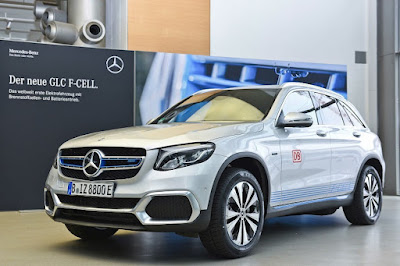
4)Mercedes-Benz GLC F-CELL: The Mercedes-Benz GLC F-CELL is a plug-in hybrid SUV that combines a fuel cell system with a rechargeable battery. It offers an electric driving range of around 49 kilometers (30 miles) and a hydrogen range of about 430 kilometers (267 miles).
Top speed - 160 km/h (100 mph).


5)BMW i Hydrogen NEXT: BMW has developed the i Hydrogen NEXT prototype, which combines a hydrogen fuel cell system with an electric powertrain. Range of 504km
Top speed - 184 km/h (114.9 mph)


6] Hydrogen car VS Electric Car 
Hydrogen cars and electric vehicles (EVs) are both alternative options to traditional gasoline-powered vehicles, offering benefits in terms of environmental impact and energy efficiency. However, they operate on different principles and have distinct advantages and disadvantages.

*Fuel Source:*
1)Hydrogen Cars:
These vehicles use hydrogen gas as fuel, which is stored in high-pressure tanks and converted into electricity through a fuel cell. The only byproduct of this process is water vapor.

1)EVs:
 Electric vehicles are powered by electricity stored in rechargeable batteries. The electricity can be obtained from various sources such as the electrical grid or renewable energy systems like solar panels.


*Environmental Impact*
2)Hydrogen Cars 
Hydrogen is a clean and abundant resource, and when used in fuel cells, the only emission is water vapor. However, the production of hydrogen often relies on fossil fuels, which can generate greenhouse gas emissions unless renewable methods are used.

2)EVs: 
Electric vehicles produce zero tailpipe emissions, which helps reduce air pollution and greenhouse gas emissions if the electricity comes from renewable sources. However, the environmental impact of EVs depends on the energy mix used for electricity generation.


*Infrastructure:*
3)Hydrogen Cars: 
Hydrogen refueling infrastructure is still limited compared to traditional gas stations. Building a comprehensive hydrogen infrastructure requires significant investment in production, storage, and distribution facilities.

3)EVs: 
EV charging infrastructure is more widespread and continues to grow, with public charging stations and home charging units becoming increasingly common. Charging an EV can be done at home, work, or public charging stations.


*Range and Refueling/Recharging Time:*
4)Hydrogen Cars:
Hydrogen vehicles typically offer longer driving ranges compared to most electric vehicles. Refueling a hydrogen car is similar to refueling a gasoline vehicle, taking just a few minutes.

4)EVs:
Electric vehicles generally have shorter ranges compared to hydrogen cars, although high-end models are catching up. However, recharging an EV's battery can take significantly longer than refueling a hydrogen car, even with fast-charging options.


*Cost:*
5)Hydrogen Cars: 
Hydrogen fuel cell vehicles tend to be more expensive to manufacture compared to EVs due to the complex fuel cell technology and limited production scale. Additionally, the cost of hydrogen production, storage, and distribution infrastructure is still high.

5)EVs:
Electric vehicles have seen a decline in prices over the years, and the cost of batteries, which are a significant component, continues to decrease. In some cases, EVs can be more affordable compared to hydrogen cars.

Upcoming blog 
1)Hypersion xp-1

By-Tanishq Deshmukh

30 May 2023

Thursday, May 25, 2023

Effect of Technology in engineering field


1) Technology changing the engineering world 
Advancements in technology are transforming the field of engineering in countless ways. With the rise of artificial intelligence and machine learning, engineers are able to design and test products more quickly and accurately than ever before. Robotics and automation are also changing the way engineers work, allowing them to automate repetitive tasks and focus on more complex design challenges. 3D printing technology is revolutionizing the manufacturing process, making it possible to create complex and customized parts with ease. And with the increasing popularity of the Internet of Things, engineers are designing products that are more connected and interactive than ever before. These are just a few examples of how technology is shaping the future of engineering.

2) Automatic and there effect on Engineering 
Automation is revolutionizing the way we live and work. In the field of engineering, automation is helping engineers design and produce products more efficiently and accurately than ever before. With the help of robotics, engineers can automate repetitive tasks, freeing up time to focus on more complex design challenges. Automation is also making it possible to create products that are more precise and consistent, leading to higher quality and lower costs. In addition, automation is helping to increase safety in the workplace by reducing the need for humans to perform dangerous or hazardous tasks. As technology continues to advance, the possibilities for automation in engineering are virtually limitless.

Automation is having a significant impact on the field of engineering. With the help of robotics and other automated technologies, engineers are able to design and produce products more quickly, accurately, and cost-effectively than ever before. Automation is also making it possible to create products that are more precise and consistent, leading to higher quality and fewer defects. In addition, automation is helping to reduce the need for humans to perform dangerous or hazardous tasks, improving workplace safety. However, automation is also changing the skills that engineers need to be successful, requiring them to have a strong understanding of robotics, machine learning, and other advanced technologies. As automation continues to evolve, engineers will need to adapt to these changes in order to stay competitive in the field.


3)Upcoming engineering Technology
The future of engineering is exciting, with new technologies emerging all the time. One area of focus is the development of nanotechnology, which involves the manipulation of materials at the atomic and molecular level. This technology has the potential to revolutionize everything from healthcare to electronics. Another area of focus is the development of smart materials, which can change their properties in response to external stimuli. These materials have a wide range of potential applications, from self-healing materials to shape-shifting structures. Artificial intelligence and machine learning are also expected to play a major role in the future of engineering, enabling engineers to design and test products more quickly and accurately than ever before. These are just a few examples of the exciting new technologies that are on the horizon for engineering.


4) Artificial intelligence 
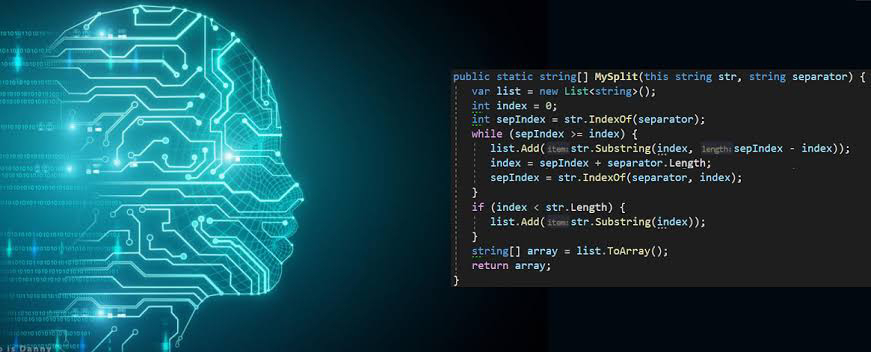
Artificial intelligence (AI) is a rapidly growing field that involves the development of computer systems that can perform tasks that typically require human intelligence, such as visual perception, speech recognition, decision-making, and language translation. AI is made possible by machine learning algorithms, which enable computers to learn from data and improve their performance over time. Applications of AI are wide-ranging, from self-driving cars to virtual assistants to medical diagnosis. While AI has the potential to transform many aspects of our lives, there are also concerns about the impact of AI on employment, privacy, and security. As AI continues to evolve, it will be important to ensure that it is developed and used in a responsible and ethical manner.


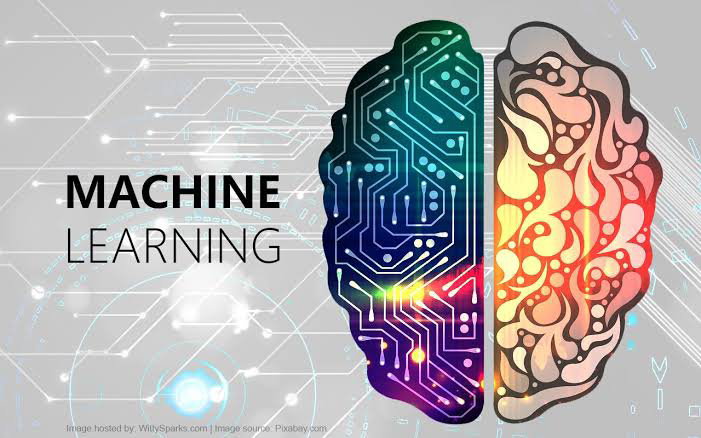
5) Machine Learning 
Machine learning is a subset of artificial intelligence that involves the development of algorithms and statistical models that enable computer systems to learn from data and improve their performance over time. Machine learning algorithms are designed to identify patterns and relationships in data, and to make predictions or decisions based on those patterns. Applications of machine learning are wide-ranging, from image and speech recognition to natural language processing to predictive analytics. Machine learning is made possible by the availability of large amounts of data and the increasing power of computing systems. As machine learning continues to evolve, it has the potential to transform many aspects of our lives, from healthcare to finance to transportation.


By- Tanishq Deshmukh 

25 May 2023


Mission: Chandrayaan 3

In this blog you will get information about Chandrayaan 3 rocket, it's purpose ,which rocket is used, which engine are power...