Showing posts with label Science. Show all posts

Saturday, July 15, 2023

Mission: Chandrayaan 3

In this blog you will get information about Chandrayaan 3 rocket, it's purpose ,which rocket is used, which engine are powered.etc so be ready to boost your knowledge by this blog. 

1)Purpose to launch Chandrayaan 3 
Its main purpose is to create and showcase innovative technologies essential for missions between planets. The propulsion module will transport the lander and rover from the injection orbit to the lunar orbit up to 100 km.This Mission cost over  ₹615crore

2)Which rocket is use in Chandrayaan 3 mission?
The Launch Vehicle Mark-III or LVM3 previously referred as the Geosynchronous Satellite Launch Vehicle Mark III or GSLV Mk III is a three-stage medium-lift launch vehicle developed by the Indian Space Research Organisation (ISRO). Primarily designed to launch communication satellites into geostationary orbit,It is also due to launch crewed missions under the Indian Human Spaceflight Programme.LVM3 has a higher payload capacity than its predecessor, GSLV.


3)GSLV Mark-lll or LVM3 (Geosynchronous Satellite Launch Vehicle)
Functions Medium-lift launch vehicle
ManufacturerISRO
Country of originIndia
Cost per launch₹500crore (US$63 million)

Size
Height43.43 m (142.5 ft)
Diameter4 m (13 ft)
Mass640,000 kg (1,410,000 lb)
Stages3

Capacity
Payload to LEO
Mass10,000 kg (22,000 lb)

Payload to GTO
Mass4,000 kg (8,800 lb)


Associated rockets
FamilyGeosynchronous Satellite Launch Vehicle
Comparable
  • Angara
  • Atlas V
  • Falcon 9
  • H-IIA
  • Long March 3B
  • Long March 7
  • Titan IIIC
  • Zenit rocket

Launch history
StatusActive
Launch sitesCARE, Chandrayaan-2, OneWeb, Chandrayaan-3
Total launches      7
Success(es)7
Failure(s)0
Partial failure(s)0
First flight
  • 18 December 2014 (suborbital)
  • 5 June 2017 (orbital)
Last flight14 July 2023


First stage – S200 Boosters
Height25 m (82 ft)
Diameter3.2 m (10 ft)
Empty mass31,000 kg (68,000 lb) each
Gross mass236,000 kg (520,000 lb) each
Powered bySolid S200
Maximum thrust5,150 kN (525 tf
Specific impulse 274.5 seconds (2.692 km/s) (vacuum)
Burn time128 s


Second stage – L110
Height21.39 m (70.2 ft)
Diameter4.0 m (13.1 ft)
Empty mass9,000 kg (20,000 lb)
Gross mass125,000 kg (276,000 lb)
Propellant mass116,000 kg (256,000 lb)
Powered by2 Vikas engines
Maximum thrust1,598 kN (163.0 tf)
Specific impulse293 seconds (2.87 km/s)
Burn time203 s


Third stage – C25
Height13.545 m (44.44 ft)
Diameter4.0 m (13.1 ft)
Empty mass5,000 kg (11,000 lb)
Gross mass33,000 kg (73,000 lb)
Propellant mass28,000 kg (62,000 lb)
Powered by1 CE-20
Maximum thrust186.36 kN (19.003 tf)
Specific impulse442 seconds (4.33 km/s)
Burn time643 s


4) Important Dates 
i)August 1
Chandrayaan will start orbiting the moon. In 5 days it will reach the Moon's outer orbit

ii)August 17
The spacecraft's propulsion module will separate from the lander module

iii)August 23
in the evening 5:47 p.m. The lander will land on the surface of the moon

Chandrayaan will travel around 4 lakh km in 42 days.


5)LVM3-M4/ Chandrayaan-3 Mission
Chandrayaan-3, India's third lunar exploration mission is ready to take off in fourth operational mission (M4) of LVM3 launcher. ISRO is crossing new frontiers by demonstrating soft landing on lunar surface by its lunar module and demonstrate roving on the lunar terrain. It is expected to be supportive to ISRO's future interplanetary missions Additionally the deployment of rover and in-situ scientific experiment will scale new heights in lunar expeditions by deploying Rover. Yes, ISRO is bringing the Moon closer to us.

6)Propulsion Module
Chandrayaan-3 consists of an indigenous propulsion module, lander module, and a rover with an objective of developing and demonstrating new technologies required for inter-planetary missions.

The propulsion module will carry the lander and rover from injection orbit to till 100 km lunar orbit. It also carries a Spectro-polarimetry of Habitable Planetary Earth (SHAPE) payload to study the spectral and polarimetric measurements of earth from the lunar orbit.

The main function of Propulsion Module is to carry the LM from launch vehicle injection orbit to till Lander separation.

*Propulsion Module Payload*
1)SHAPE
(Spectro-polarimetry of HAbitable Planet Earth)
An experimental payload to study the spectro-polarimetric signatures of the habitable planet Earth in the near-infrared (NIR) wavelength range (1-1.7 m).


7) Satellite Information 
I)Major Specifications of Lander
Mission life:1 Lunar day (14 Earth days)
Mass:1749.86 kg including Rover
Power :738 W (Winter solstice)
Payloads:3
Dimensions (mm³): 2000 x 2000 x 1166 : 
Communication:ISDN,Ch-2 Orbiter, Rover
Landing site:69.367621 5, 32.348126 E
 
*Lander Payloads*
1)RAMBHA-LP
(Langmuir Probe) 
To measure the near surface plasma (ions and electrons) density and its changes with time.

2)ChaSTE
(Chandra's SurfaceThermo-physical Experiment) 
To carry out the measurements of thermal properties of lunar surface near polar
region.

3)ILSA
(Instrument for Lunar Seismic Activity)
To measure seismicity around the landing site and delineating the structure of the lunar crust and mantle.

II)Major Specifications of Rover
Mission Life:1 Lunar day
Mass :26 kg
Power:50W
Payloads:2
Dimensions (mm³):917 x 750 x 397
Communication:Lander 

*Rover Payloads*
1)APXS
(Alpha Particle X-Ray Spectrometer)
To derive the chemical composition and infer mineralogical composition to further enhance our understanding of lunar surface.

2)LIBS
Laser Induced Breakdown Spectroscope
To determine the elemental composition (Mg, Al, Si, K, Ca ,Ti, Fe) of lunar soil and rocks around the lunar landing site


*Important images*

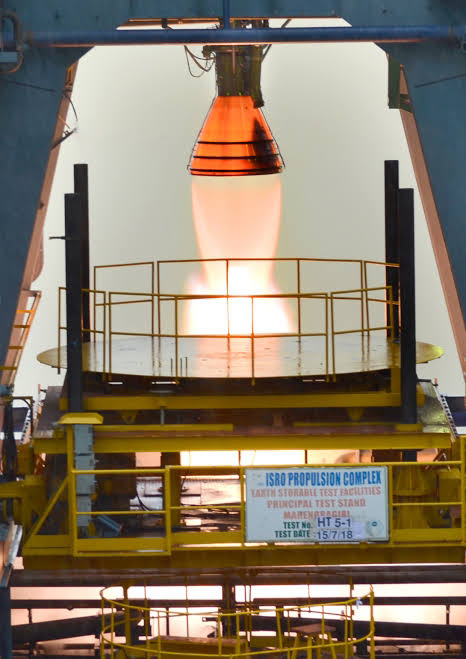
        Solid S200 engine- Chandrayaan 3

            Vikas engines-Chandrayaan 

          1 CE-20 engine- Chandrayaan 3

 "A reader lives a thousand lives before he dies."
                                       -George R.R. Martin


*Follow us on and Subscribe*
Join our Telegram group


By- Tanishq Deshmukh

15 July 2023

Monday, June 5, 2023

FUTURE OF TECHNOLOGY


The future of technology is likely to be marked by remarkable advancements and transformative changes across various fields. Here are some key areas where we can expect significant developments:


1)Artificial Intelligence (AI): AI will continue to evolve and have a profound impact on numerous industries and aspects of our lives. Advancements in machine learning, deep learning, and neural networks will lead to more sophisticated AI systems capable of complex decision-making, natural language processing, and advanced pattern recognition.


2)Internet of Things (IoT): The IoT will become even more pervasive as more devices and objects are connected to the internet, enabling seamless communication and data sharing. This interconnectedness will revolutionize industries such as healthcare, transportation, energy management, and smart homes, where devices and systems will work together to enhance efficiency and convenience.


3)5G and Next-Generation Connectivity: The deployment of 5G networks will enable faster and more reliable wireless connectivity, supporting a range of emerging technologies. This will facilitate the widespread adoption of IoT devices, autonomous vehicles, virtual reality (VR), augmented reality (AR), and other data-intensive applications.


4)Blockchain Technology: Blockchain, the underlying technology of cryptocurrencies like Bitcoin, holds immense potential beyond finance. It can revolutionize various sectors, including supply chain management, healthcare, voting systems, and digital identities, by providing secure and transparent transactions and data storage.


5)Quantum Computing: Quantum computing has the potential to solve complex problems that are currently intractable for classical computers. As the technology matures, we can expect significant advancements in areas such as cryptography, optimization, drug discovery, and material science, with profound implications for various industries.


6)Augmented Reality (AR) and Virtual Reality (VR): AR and VR technologies will continue to evolve, transforming how we interact with digital information and our physical surroundings. From immersive gaming experiences to enhanced training simulations, these technologies will find applications in entertainment, education, healthcare, architecture, and more.


7)Sustainable Technologies:With increasing concerns about climate change and environmental sustainability, technology will play a crucial role in developing clean energy sources, reducing carbon emissions, and creating sustainable solutions. Advancements in renewable energy, energy storage, electric vehicles, and green materials will contribute to a more sustainable future.


8)Robotics and Automation: Robotics will advance further, enabling the automation of complex and physically demanding tasks across various industries. Collaborative robots (cobots) will work alongside humans in manufacturing, healthcare, agriculture, and other sectors, enhancing productivity, efficiency, and safety.

It's important to note that the future of technology is influenced by a range of factors, including scientific discoveries, economic considerations, societal needs, and ethical considerations. Striking a balance between technological progress and the well-being of individuals and the planet will be crucial for shaping a positive future.


*Blogs realted to this blogs*


By- Tanishq Deshmukh

5 June 2023

Wednesday, May 17, 2023

Science ( What, Definition, scientist)


1)What is science?
Science is a systematic and logical approach to discovering how things in the universe work. It is a way of gaining knowledge and understanding about the natural world. The scientific method is a process that scientists use to study and understand the world around us. This method involves making observations, formulating hypotheses, testing those hypotheses through experiments, and analyzing the results. Science is used to develop new technologies, to explore space and the depths of the ocean, to cure diseases, and to solve many of the world's problems. Without science, we wouldn't have the modern world that we live in today.


2)Why science is important ?
Science is important because it helps us to understand the world around us and to solve many of the world's problems. Science is used to develop new technologies, to cure diseases, to explore space and the depths of the ocean, and to understand the natural world. It is also used to solve problems related to the environment, energy, and sustainability. Science has led to many of the advances that we enjoy in modern society, from computers and smartphones to medical treatments. Without science, we wouldn't have the knowledge and tools that we need to make the world a better place.


3) Who are Scientist?Scientists are individuals who use the scientific method to study and understand the natural world. They conduct experiments, make observations, and analyze data to develop theories and explanations for various phenomena. Scientists work in a variety of fields, including biology, chemistry, physics, astronomy, and many others. They may work in academia, government, or private industry, and their research may be basic or applied. Scientists are critical to advancing our understanding of the world around us and developing new technologies and innovations that improve our lives.

3) Famous Scientist In there Fields


1} Physicists1]Some of the most famous physicists in history include:
1. Albert Einstein
2. Isaac Newton
3. Galileo Galilei
4. Niels Bohr
5. Richard Feynman
6. Werner Heisenberg
7. Erwin Schrödinger
8. Marie Curie
9. Stephen Hawking
10. Max Planck.

1]Some of the most famous Indian physicists include:
1. C.V. Raman
2. Homi J. Bhabha
3. S.N. Bose
4. Meghnad Saha
5. Satyendra Nath Bose
6. Harish-Chandra
7. Subrahmanyan Chandrasekhar
8. Jayant Narlikar
9. Ashoke Sen
10. Vijay Kumar Patodi.


2}Chemists 
2]Some of the most famous chemists in history include:
1. Marie Curie
2. Dmitri Mendeleev
3. Linus Pauling
4. Robert Boyle
5. Antoine Lavoisier
6. John Dalton
7. Rosalind Franklin
8. Glenn T. Seaborg
9. Irène Joliot-Curie
10. Friedrich Wöhler.

2)Some of the most famous Indian chemistry  include:
1. C. N. R. Rao
2. Asima Chatterjee
3. S. Chandrasekhar
4. Prafulla Chandra Ray
5. M. S. Swaminathan
6. S. S. Bhatnagar
7. A. V. Rama Rao
8. Keki Hormusji Gharda
9. Animesh Chakraborty
10. Anand Kumar Bachhawat.


3}Biologists
3]Some of the most famous biologists in history include:
1. Charles Darwin
2. Gregor Mendel
3. Rosalind Franklin
4. James Watson
5. Francis Crick
6. Barbara McClintock
7. Lynn Margulis
8. Jane Goodall
9. Stephen Jay Gould
10. E. O. Wilson.

3]Some of the most famous Indian biologists include:
1. J. B. S. Haldane
2. S. Chandrasekhar
3. M. S. Swaminathan
4. G. N. Ramachandran
5. Obaid Siddiqi
6. S. Varalakshmi
7. A. K. Sharma
8. N. R. Kulothungan
9. Upadhyaya
10. S. K. Sharma..


By- Tanishq Deshmukh

17 May 2023

Mission: Chandrayaan 3

In this blog you will get information about Chandrayaan 3 rocket, it's purpose ,which rocket is used, which engine are power...